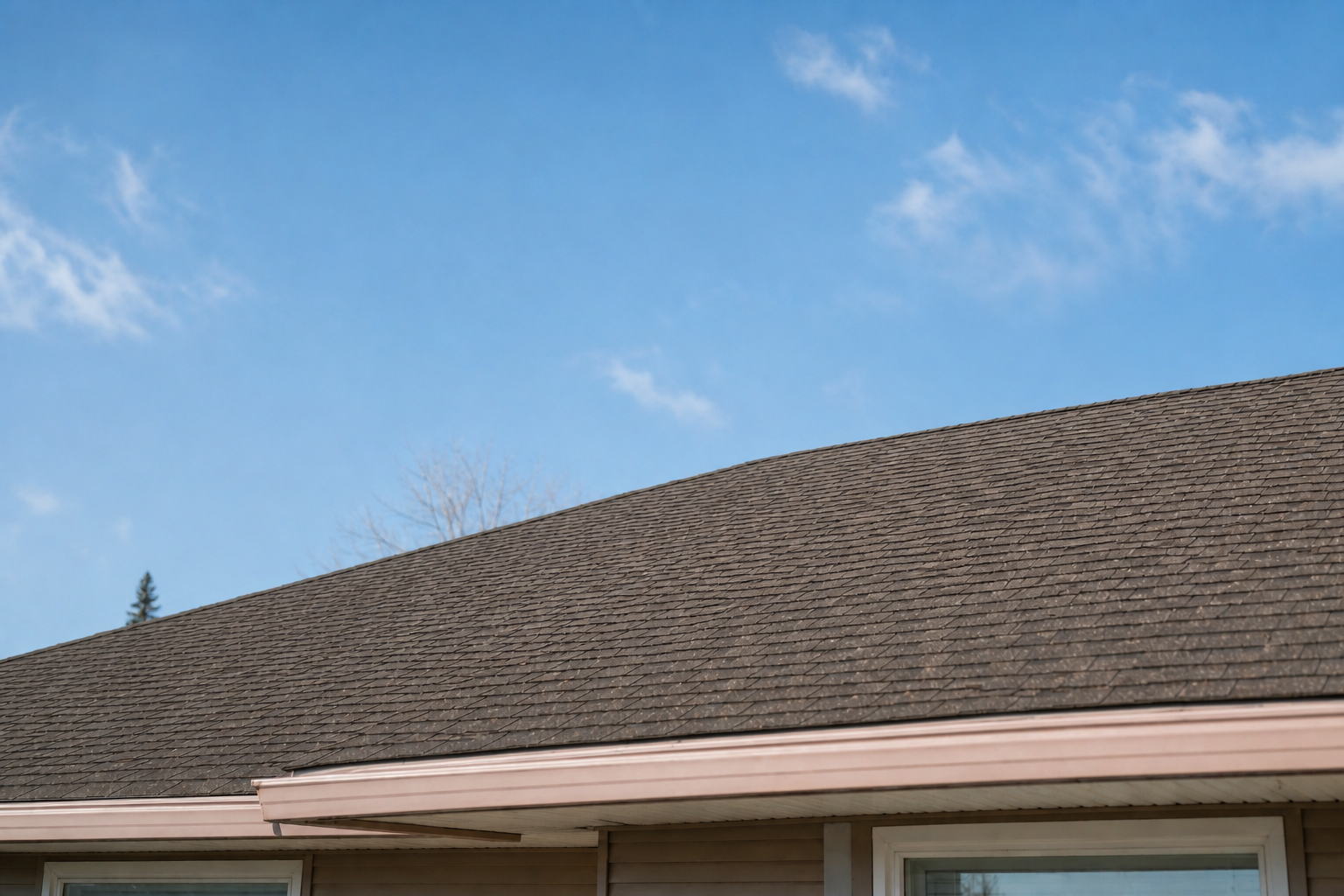
Where leaks actually start
Most leaks we find on Plano roofs trace back to five spots: the rubber boots around plumbing vents, the flashing around a chimney or skylight, the valleys where two roof planes meet, and the nail heads on an older shingle field. Rubber boots dry out and crack after years in Texas heat, and that crack is often smaller than a dime, which is why it goes unnoticed until a ceiling stain shows up two rooms away.
Flashing failures are the second most common cause. A chimney counter flashing that was caulked instead of properly stepped into the brick will hold for a while, then open a gap the first time the mortar shrinks. We check every one of these points before we ever look at the shingles themselves, because replacing shingles over a bad flashing detail just moves the leak somewhere else.
How a repair visit works
We walk the roof and the attic on the same visit. The attic tells us more than the shingles do, because water travels along the underside of the deck before it shows up as a stain, and the wet trail points us back uphill to the actual entry point. We photograph both the roof and the attic and walk you through what we found before any repair starts.
Repairs use matching shingles when the color is still available, new flashing formed on site rather than a generic piece bent to fit, and sealants rated for roofing rather than a general purpose caulk. We do not seal over a problem we have not identified first.
Repairs after wind and hail
Straight line wind is common here from late winter into early summer, and it lifts shingles along a line without always tearing them off completely. A shingle that has been creased that way will fail eventually even if it looks fine from the driveway, so we replace creased shingles rather than just the ones that are visibly missing.
Hail bruises the mat under the granules without always breaking through it, and that damage is easiest to see with a close inspection of the surface. If your roof took a hailstorm within the last year, it is worth a look even if nothing appears wrong from the ground below.
When a repair is not the right call
A roof with soft decking in more than one spot, widespread granule loss, or more than one layer of old shingles underneath is usually past the point where a repair makes sense. We tell you honestly when that is the case and show you the photos so the decision is yours to make, not ours to push on you.